
Warm, delicious, on time: what does the quality of delivered lunch really depend on?

Placing an order literally takes a minute today. Evaluating whether it was successful only comes when opening the box, though it is decided much earlier: in the kitchen, at the packing stage, and in the first minutes of the journey. That is why two restaurants with very similar reviews can deliver a completely different experience, even though both prepare their dishes correctly.
What happens to dinner between the kitchen and your door?
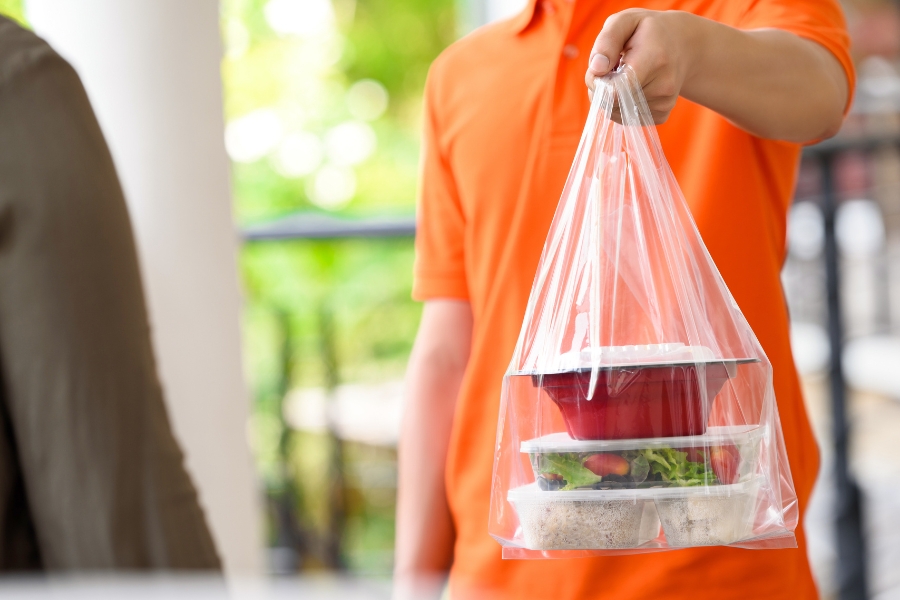
Hot dish sealed in a container it doesn't stand still. Water vapor condenses on the lid and returns to the dish, the breading softens, the fries lose their crispiness, and the sauce soaks into the side dishes that were supposed to stay dry. The most happens in the first dozen or so minutes, because that's when the temperature drops the fastest, and that's when it is decided whether the meal will arrive in a form close to the one from the kitchen. Good restaurants compensate for this by the method of packingseparate moisture-sensitive ingredients, use ventilated containers, and send sauces separately. Thoughtful hot meal transport is therefore an equally important element of the service as the recipe itself.
Not every dish handles the journey the same way. Soups, stews, dumplings, or baked dishes forgive a dozen minutes in a thermal bag, while salads with a warm addition, breaded meat, and dishes with a crispy crust require either a very short route or separate packaging for each element.
How to spot a restaurant that is actually good at delivery?
A wide choice in the city works both ways. When it comes to lunch delivery in Krakow, the number of suggestions can sometimes be more troublesome than helpful, because under a single category there are both ghost kitchens operating solely for takeout and restaurants for which delivery is an addition to dine-in service. The former usually refined logistics and a menu designed for transport. The latter offer a wider selection, but during peak hours, delivery takes a back seat for them.
Before you choose a permanent place for weekday lunches, check how the establishment operates between twelve and three, which is when orders are at their peak. It is also helpful to check if the place offers regular lunch menu with a rotating menu, because such a solution usually means ready-made sets served faster than dishes from the full menu.
What to pay attention to before placing an order?
A few details are visible even before clicking the order button, and they most often determine the final impression:
- actual delivery time during peak hours, and not the one declared in the application,
- delivery range to your district and an eventual surcharge for further addresses,
- packaging method, meaning separate containers for sauces, salads, and side dishes,
- a personalized lunch menu, prepared with transport in mind rather than copied from the on-site guest menu,
- minimum order value and delivery cost added only in the summary,
- the option to contact the restaurant by phone if your order is delayed.
The more of this information a restaurant provides upfront, the lower the risk that the delivery will turn out to be a gamble.
Who is responsible for the condition of the dish that was delivered to the door?
Doubts usually arise when the lunch arrives lukewarm or battered. The rules here are unambiguous, and Chief Sanitary Inspectorate on the page https://www.gov.pl/web/gis/bezpieczenstwo-zywnosci reminds that The following entity is responsible for food safety: a food business operator at every stage of production and distribution, which also applies when a finished meal leaves the kitchen. In practice, this means that complaints are made to the restaurant, even if the delivery is handled by a third-party app. It is worth doing this immediately, with photographic documentation, because reputable establishments treat such feedback as information about their own workflow rather than an attack.
Is it possible to order lunch and not regret it?
Most definitely, provided the choice is based on more than just a photo of the dish and the average rating. Warm temperature, preserved texture, and a predictable delivery time are the result of specific decisions: choosing transport-resistant dishes, packaging quality, and real control over the order queue. Tried-and-tested places are usually recognized by the second and third order, which is why it is worth narrowing down the list to a few restaurants and testing them on a typical workday rather than a quiet Sunday.
Leave a Reply
You must be logged in to post a comment.