
Metal stamping in Poland: role, challenges and directions of development

The metal stamping process – that is, the forming of metal sheets or strips into specific parts using presses and dies – constitutes one of the key elements of the Polish metal industry. The Polish metal sector supplies components for the automotive industry, power sector, construction, household appliances, and many other sectors — and metal stamping is often the technology of choice wherever high repeatability, precision, and serial production are required.
Technology and market conditions
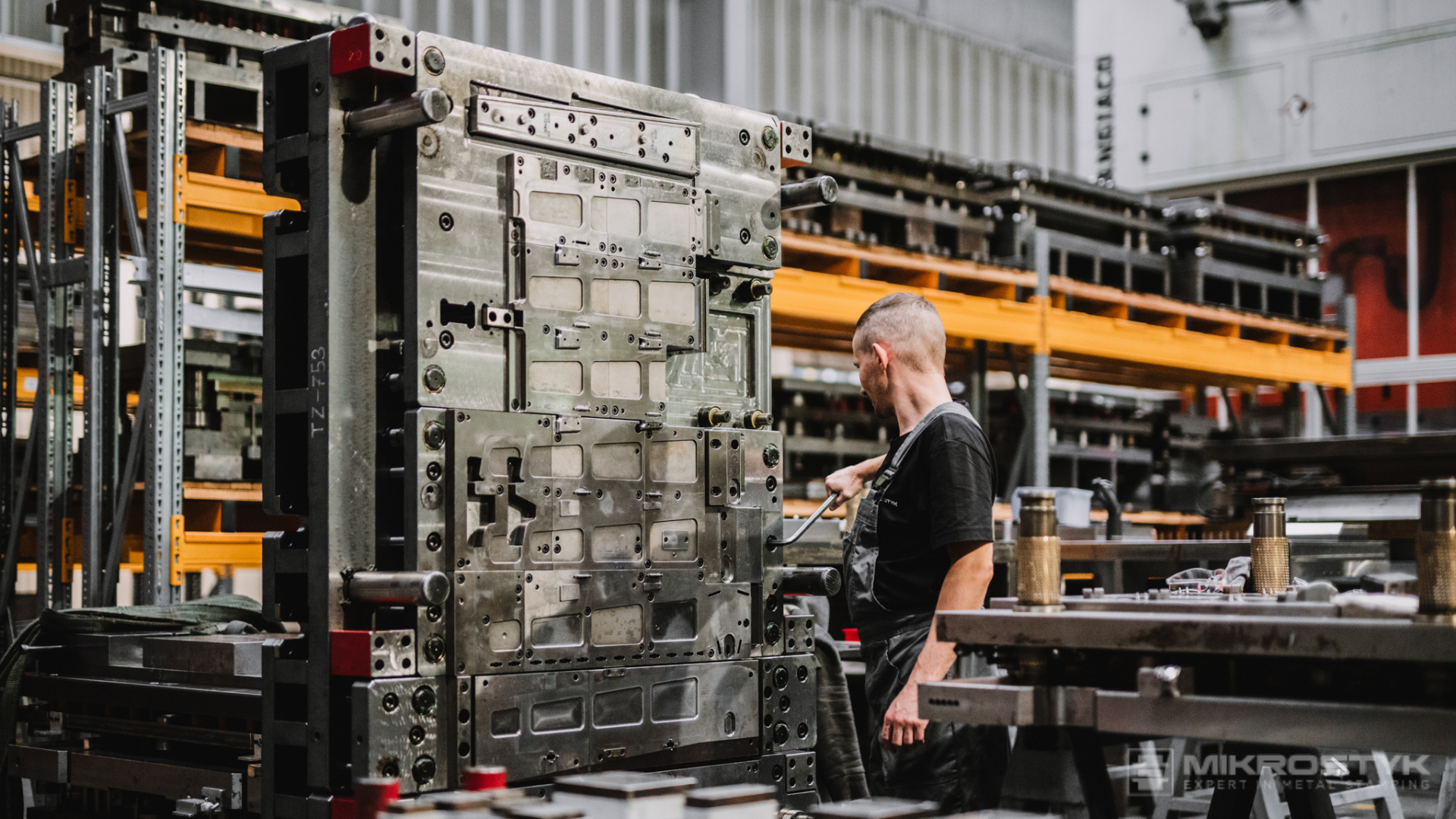
Metal stamping in Poland benefits from a well-developed technological base – including mechanical, hydraulic, and eccentric presses, progressive lines, and tool shop support. For example, companies offering stamping indicate press pressures ranging from several dozen to several hundred tons.
From a technical standpoint, technologies such as progressive stamping (where a metal sheet or strip passes through multiple stations and is punched, bent, and formed simultaneously) are becoming the standard in components for the automotive industry and precision equipment.
Challenges and opportunities
Although the metal stamping sector in Poland has a strong foundation, it faces many challenges:
- global price competition and the necessity of investing in automation and high quality,
- shorter delivery times and pressure on production flexibility — the geographical proximity of the supplier is becoming important to limit transport and logistics risks,
- growing demands regarding energy efficiency and environmental impact — many plants are modernizing their machinery parks and using green energy.
Choosing a local metal stamping partner can be an advantage — shorter transport distances, better quality control, and supporting the Polish economy. Companies like Mikrostyk emphasize that cooperation with a local supplier can reduce the risk of delays and costs related to logistics. Check the website: https://mikrostyk.pl
Development directions and what to watch
In the coming years, the metal stamping industry in Poland will likely focus on:
- greater involvement of automation and robotisation of stamping processes — to reduce the unit cost of the part and improve quality,
- increasing the share of domestic producers in comprehensive supply chains for the automotive, home appliance, and machinery industries — which will strengthen Poland's role as an exporter of stamped components,
- growing specialization in components requiring high precision or complex shapes — processes such as deep drawing, multi-station transfer stamping, or progressive stamping.
- focusing on sustainability — emission reduction, energy-material-waste optimization, which is becoming an important criterion for foreign clients.
On Mikrostyk's website, you can find specific examples of a company that carries out modernizations related to metal stamping and cutting: https://mikrostyk.pl
The Polish metal stamping industry has solid technological, geographical, and logistical foundations. The metal stamping process plays a key role in the production of components for many industries—from automotive to household appliances. Despite challenges resulting from global competition and growing quality and environmental requirements, Polish enterprises have the opportunity to leverage their position: customer proximity, high quality, and production flexibility are advantages that can attract foreign partners. Companies such as Mikrostyk S.A. are an example that it is possible to combine tradition, technology, and environmental responsibility in the metal stamping sector.
Leave a Reply
You must be logged in to post a comment.